The Living Uplands tenth annual bird count was assisted by young Rangers from the Durham Wildlife Trust, it has been from the very first.
John Hayton, Education and Engagements Officer, Durham Wildlife Trust comments on the opportunity the Living Uplands annual bird count has offered:
“The opportunity for our Nature and Conservation Rangers to take part in bird counts on the Weardale Moors is a really exciting privilege. To explore the moors with the expertise of the land manager allows the young people to better understand the value these habitats have for protected species such as Short-eared Owl and red-listed species such as the Black Grouse, but it also demonstrates the need to be in tune with the land and to understand the best ways to nurture it effectively.”
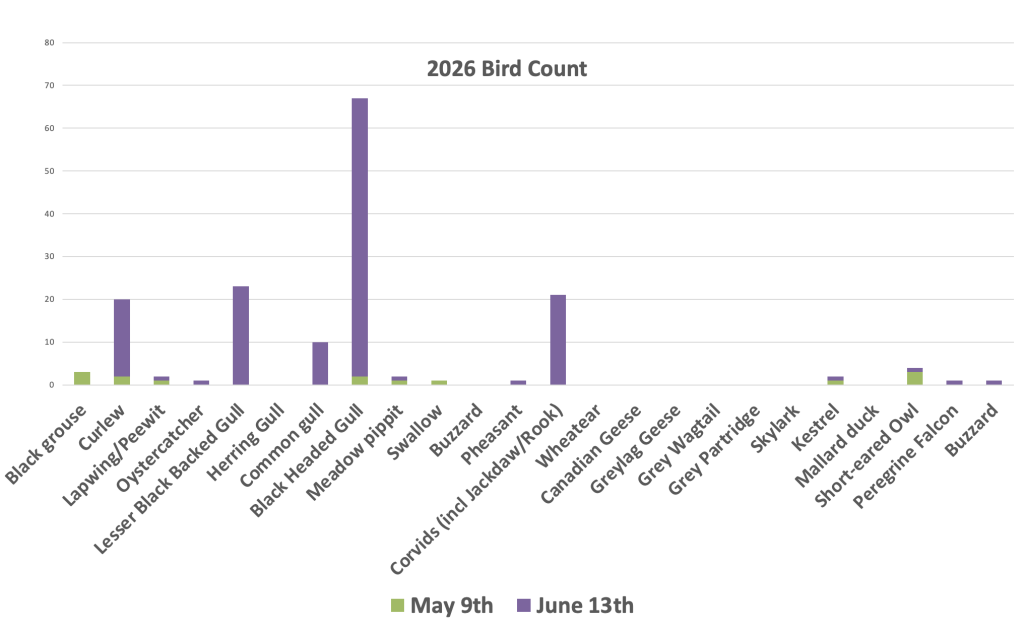
Once again, the count took place over two sessions. There was foggy weather for the first count May, and thankfully a clear day with sunny spells in June. This has resulted in numbers that are not directly comparable to other years as the lack of visibility constrained count numbers.
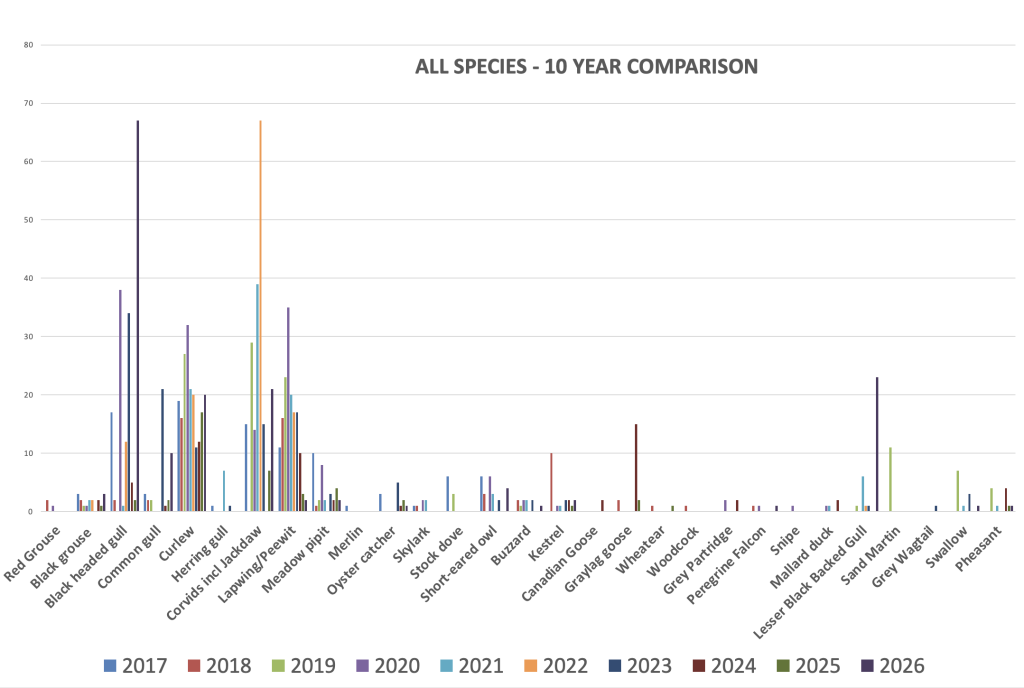
The relentless rain in the spring of 2025, one of the wettest many could recall for some years, had proven challenging for birdlife and nesting seemed to be later in the season; and this could be easily seen with comparison to the 2024 count.
Yet it was still possible to say that 2025 had been a year of recovery, from a particularly poor count in 2024, and in 2026 that recovery continued. Curlew had a good year, and the short-eared owls were back. A note of caution in that the counts took place before the exceptionally long and hot summer that left much of the moorland parched. 2027 will inform us of what impact that had on the chicks that would have fledged through this period.
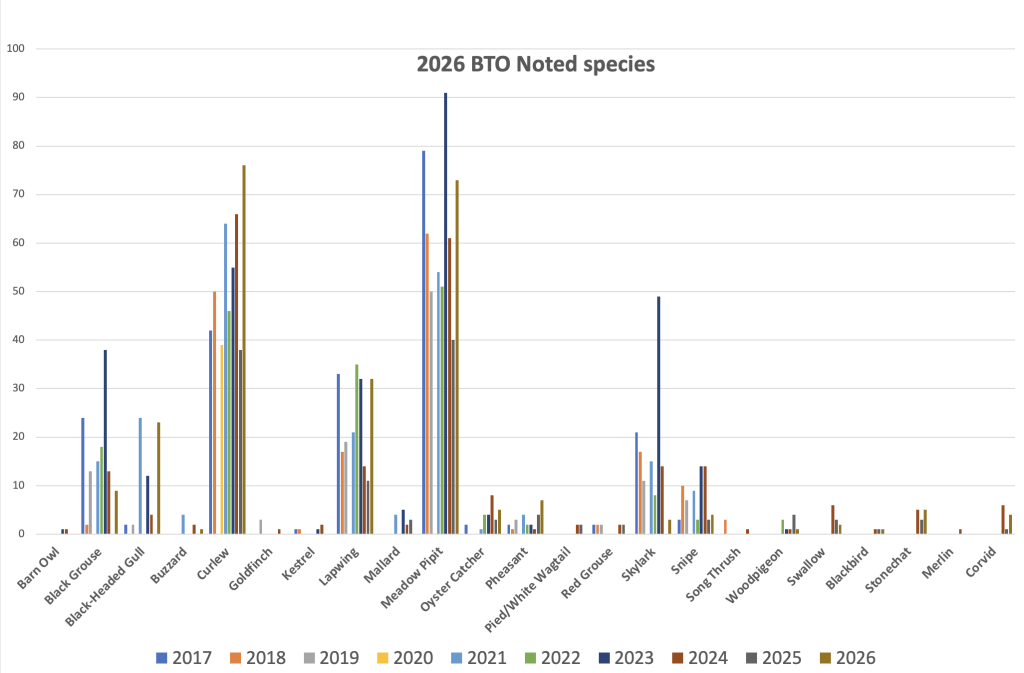
A more comprehensive survey by the BTO survey of a nearby similar moorland also reported a significant improvement in curlew and lapwing.
What have we learned over ten years?
First, that assuring a safe and healthy moor is essential to sustaining a carrying capacity of important red and amber listed species, particularly ground-nesting birds who spend the spring and summer nesting on this habitat. We know the importance of consistent effective land management to the benefit of ground nesting birds that return to the same place year on year: tagging migrating curlew.
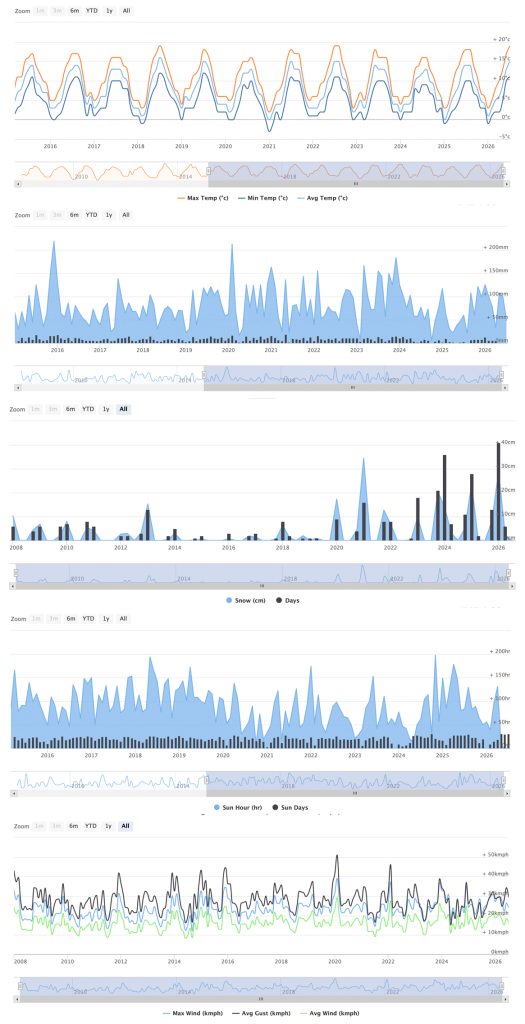
Second, the most common explanation for the ebbs and flows of numbers lies in the volatility of the weather over the ten years – mild Winters, long wet Springs, long dry Springs, long hot summer, long wet summer etc. Each impact to greater or lesser extent on one species or another.
Certainly, bird flu impacted on gull populations and might explain noticeable reductions in carrion species such as buzzards. But it is the ‘too wet’, or ‘too dry’ conditions, and how the weather impacts plant and insect life on which ground nesting and other small birds feed that has created conditions impact on particularly ground-nesting birds. Together, data and ground-truthing tell the story; the weather charts at the end of this article clearly shows variations, and the .
Third, two thirds of the list of birds counted over this project to date are red or amber-listed on the BTO’s Birds of Conservation Concern. That is remarkable. The uplands is a managed landscape that sustains habitat important to assuring some of our most endangered birds are protected.
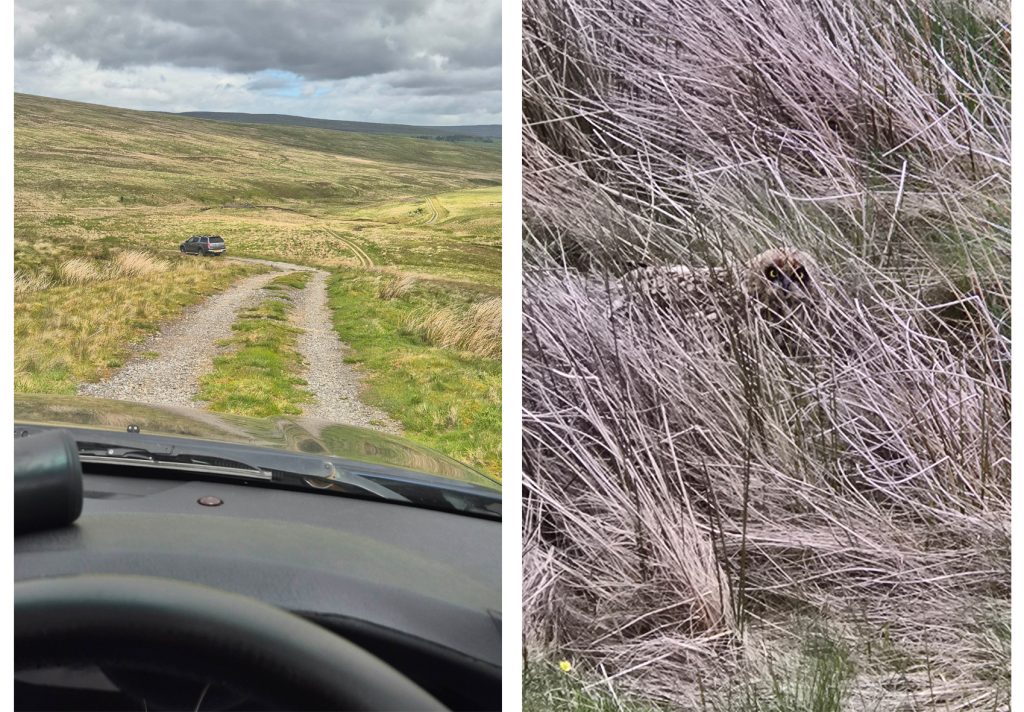
Monitoring bird numbers and tracking weather patterns is essential to better understand how we may need to manage the uplands in years to come.
Fundamentally, the uplands need to be managed in a way that sustains carrying capacity of endangered birds so that numbers never dip to critical. This is a huge challenge for land managers, set against what seems to be increasingly uncertain seasonal weather conditions.
The data collected in small projects such as the annual bird count by Living Uplands means land managers will be better able to understand what is happening on the upland moorlands and adapt activities accordingly.
In summary Jim Cokill, Chief of Durham Wildlife Trust says:
The bird count has been going for ten years, which shows the value young people get from taking part. As the monitoring is long term we’re also getting some genuinely useful insights into local bird populations. Hopefully we’ll still be collecting that data in another ten years.