- Water Course: 7.14 units (r2a priority habitat).
- Hedgerow: 7.34 units (Line of trees 34)
This is part of a 200ha BNG habitat improvement plan. Living Uplands is not an agent. More information is available from Bidwells.
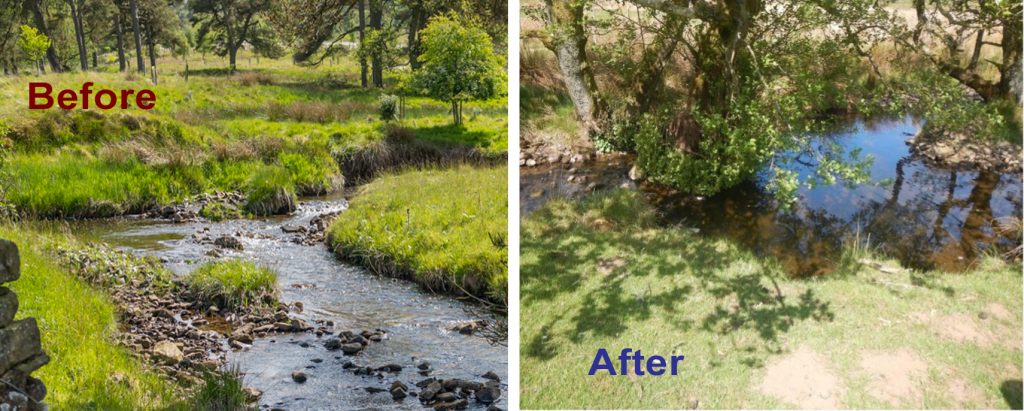
The water course is at the top end of a Wear tributary. Improvement is planned to deliver flood attenuation and to enhance the bankside habitat. The riverbank has been degraded by over grazing through the years. There has been no opportunity for shrubs or trees to grow and the banks have been trampled.
The priority will be to fence off the watercourse to around two metres either side. This will enable vegetative cover to develop along the banks. A line of native trees will be planted below the woodland; Alder, Goat and Grey Willows, Downy Birch and Hawthorn, from seed, propagation from locally sourced cuttings, and using nursery grown whips of native stock. These will give shade along the watercourse.
At strategic points along the watercourse, anchored brush wood and pollard tree stems will create pools and gravel beds. Scrapes nearby will hold water during peak flow and provide wader opportunities for upland waders.
Swinhope burn has been a significant spawning place for brown trout, salmon and sea trout in past years, and it anticipated that the overall improvements to the watercourse will in time fully restore the value of the Burn to fish life.
Living Uplands looks forward to reporting on progress in the improvement of habitat and what we learn from monitoring methods and data collected. With climate change, the more we understand about the impact on ecosystem services the better informed we will be in making management decisions to sustain health and life of our great English upland landscape.